
Design Details That Disappear: how to minimize visual clutter on your walls and ceilings. 3 main types of clutter along with product links and simple tips to minimize the impact of clutter
What is visual clutter and why does it matter?
In today's homes, we need items such as heat registers, air returns, smoke detectors, outlets and switch plates, speakers and TVs, as well as thermostats and control panels. These elements contribute to a significant amount of visual clutter that disrupts your carefully chosen design elements like paint colors, wallpaper, and tile.
As a designer, I've faced these challenges in renovation projects. Solutions can range from affordable to costly, but they all significantly help reduce visual clutter, giving your home a more cohesive and upscale appearance. Sometimes, what you don't notice is more crucial than what you do.
While you should certainly take steps to use these products I will mention below, one of the easiest things you can do in your home renovation to reduce visual disruptions is to work with the tradespeople throughout your project to identify the best placement for these items at the rough in stages. Without a homeowner or designer looking over their shoulder, most trades will place these items for maximum effectiveness, or where their job is the easiest. However, you may prefer them placed in a less obvious place.
For example, in a recent renovation we had to place heat vents in several rooms. The HVAC guy was placing when I walked onto the job site. I was not pleased with the seeminly random locations that did not make visual sense. We worked together and tweake the locations. In one case he was about to place the vents haphazardly throughout hte room when it did not sacrifice efficiency but looked much better to have each vent centered over a dormer window. Having these small but noticibale items in 'off" placement - not centered in a room or over a window can make the room feal builder quality vs well designed.
Let's break it down!
Category 1 - Switches and Outlets
There are numerous options available in this category. For rooms with wallpaper, you have two alternatives. The most economical choice is to have your wallpaper installer cover the plate with paper. Alternatively, for a more premium option, you can choose a lucite switch plate, such as those offered by Forbes and Lomax.
For rooms with paint on the walls the solution is super easy and in expensive - we want paintable switch plate covers. You can easily get them on Amazon.
Outlets, much like switches are abundant in our homes and with some thought and planning you can help make them look better. Here a a few options
1) Simple paintable plate covers from Amazon

This .......
Becomes ..... This

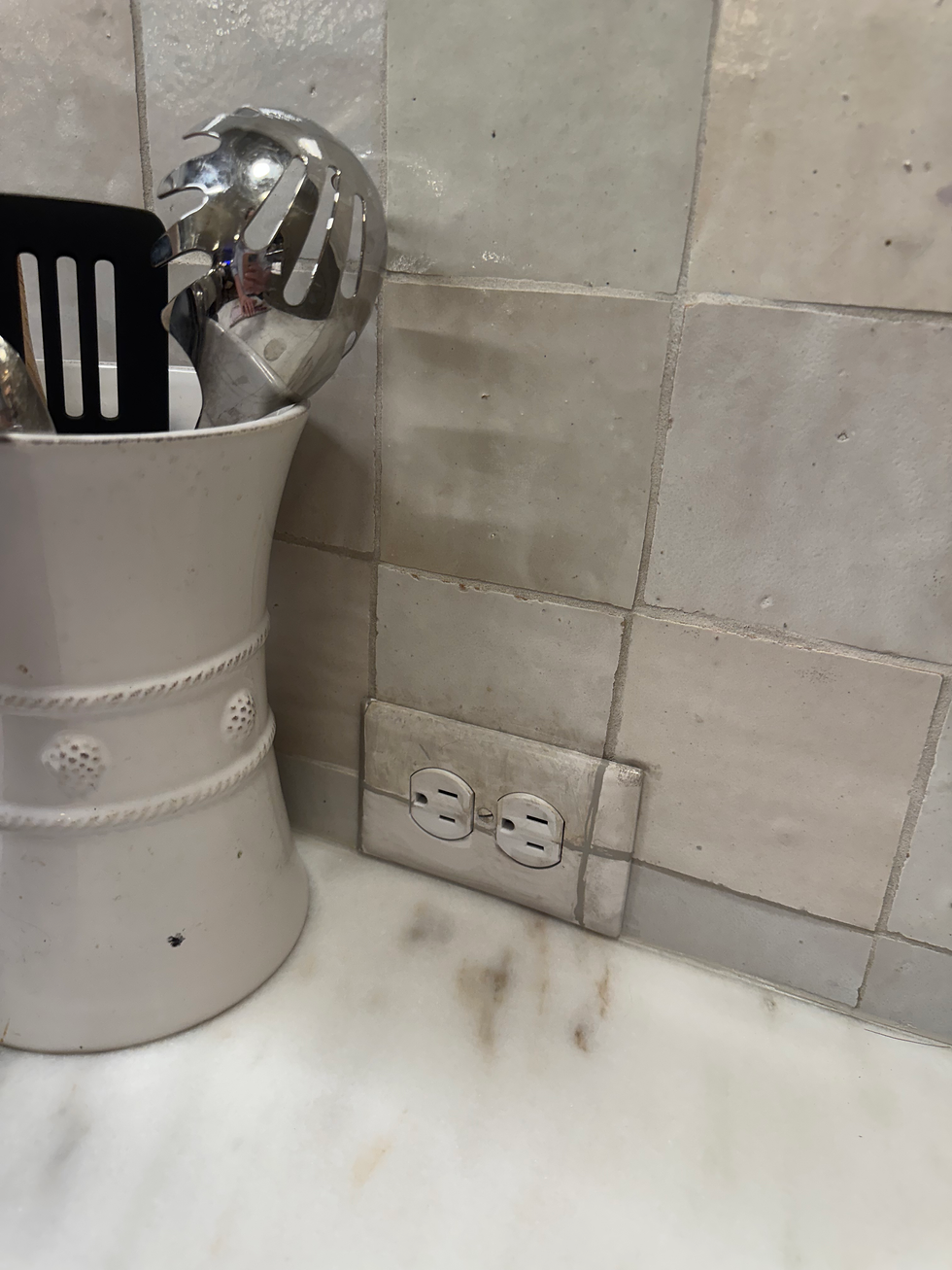
2) Artist painted covers for tile and stone surfaces
With the hand of a good artist, these outlets blend into the stone and tile in my kitchen. I use the Artist's Studio. Clive does a fantastic job! This trick can add up in cost, but I choose to only have the artist paint the most important switches.
this.....

Becomes This!!!
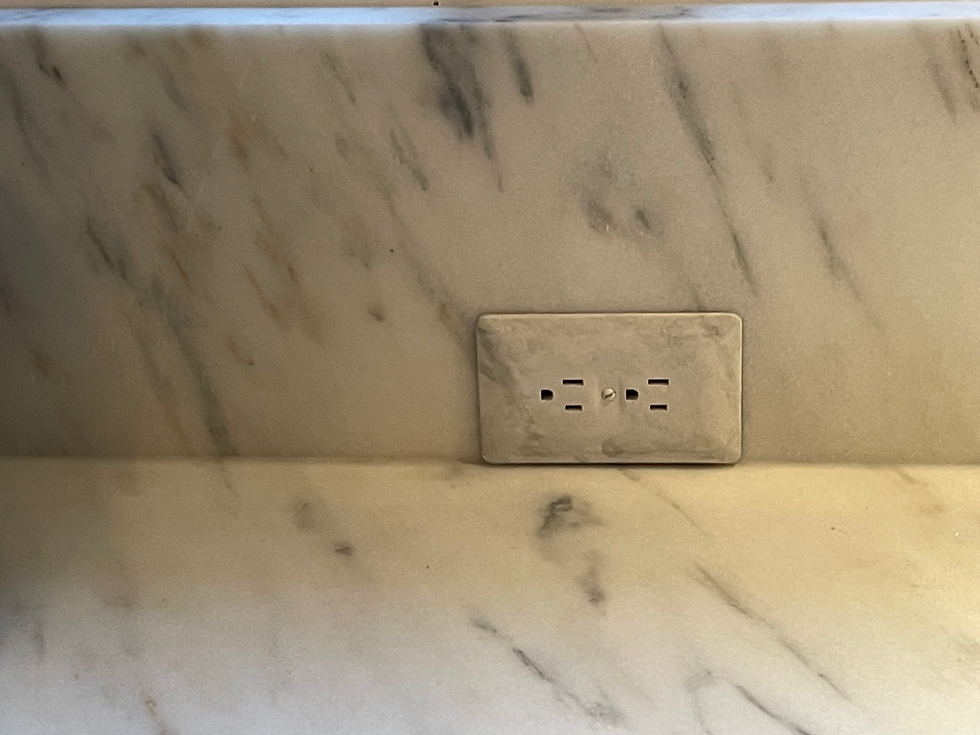
This ....

Becomes This!!!
3) Use of beautiful outlets that coordinate with adjacent design elements
In this mud hall, I specified these decorative brass plate covers for the heat register and outlets. I upgraded to Forbes and Lomax switches for the light switches. They are costly, but the click they make and the old-world charm are unbelievably satisfying for these high-touch features. Budget constraints did not allow them to be placed throughout the home; however, I used them sparingly, choosing to place them in spaces that had painted paneling where the plastic paintable covers were just not going to be enough of an effort to reduce the visual cheapness of plastic in an elevated space.
Brass outlets and brass custom size vent covers are from Rejuvenation Hardware
and the brass switches are Forbes and Lomax
Recently hitting the market is another British outlet company called Corston that is just recently UL listed for the USA. Their switches run about half the cost of the Forbes and Lomax for an identical look in my estimation.
Category 2 - air registers and air returns
For heating and cooling vents, the aim is to have them seamlessly integrated into the floor. This is typically achieved during a major renovation when an HVAC professional is available to relocate the venting, and a flooring expert is present to complete the aesthetic. Floor vents can be custom-made tiles that sit flush with the floor. It's impressive!
For wood floors, flush vents made from the same wood species can be purchased, stained, and installed by your hardwood flooring team.
Alternatively, a brass metal vent cover can be used for a classic and vintage look. In painted rooms, I prefer painting wood vents to match the wall color so they blend in, unlike a white metal vent that stands out. For wallpapered walls, white metal vents can be covered with wallpaper, and having your wallpaper installer do this can help conceal them, making them less noticeable.
What we don't want :

Category 3 - Technology
Technology offers so many ways to make our homes function smoothly and reduce visual clutter. The three best advances that home technology has made to help designers reduce visual clutter are:
1) The Frame TV from Samsung
The Frame TV from Samsung is the sleekest, lowest profile TV to date. It sits flush on the wall. Plugs and connections are recessed into the wall, allowing for this sublime flush mounting. You can even select various art to display when the TV is not in use. If you select from one of the various frame options on Samsung or Etsy websites, you can make it look like a real piece of art.
Select a wood frame that suits your decor and voila...
2) - hidden speakers
This is such incredible technology. Can you imagine having speakers in the wall that sound great? You can have these. They are placed in the framing at the rough stage. They get walled over, and yet they sound fabulous. I recommend taking a photo for later knowledge of the exact placement—but once the walls are up, you can place pictures and wallpaper as you normally would. No ugly large circle in the ceiling! Amazing.
3) - control pads when there are just too many switches
Over the past few decades, as advancements in lighting technologies have proliferated and increasingly intricate layers of illumination have been integrated into our homes, the landscape of home lighting control has evolved significantly. One notable innovation is the option to hire a professional integrator who specializes in creating sophisticated control centers. These control centers are often accessed via a keypad installed in your home, providing a streamlined interface that allows residents to manage all their lighting switches from a single, user-friendly location. This modern approach to home lighting control not only enhances convenience but also elevates the overall aesthetic of the living space.
In my experience, if you find yourself needing to manage more than four switches in a particular area, it is highly advisable to consider the implementation of a control panel instead of relying on traditional switch configurations.
When you have more than four switches grouped together in a single gang, it can lead to a significant amount of visual clutter. This clutter not only detracts from the visual appeal of your space but also creates a confusing environment for users trying to remember which switch operates which light fixture. The challenge of developing muscle memory becomes even more pronounced in such scenarios, as the proximity of multiple switches can cause uncertainty and frustration during use.
By opting for a centralized control panel, you can simplify the user experience dramatically. These panels often come equipped with customizable buttons that can be labeled according to your specific lighting needs, allowing for easy identification and access. Furthermore, many modern control systems offer the ability to integrate with smart home technology, enabling you to control not only your lighting but also other elements such as temperature and security systems from the same interface. This level of integration can significantly enhance the functionality of your home, providing a seamless and cohesive living experience.
In conclusion, as our homes become more technologically advanced and our lighting needs grow more complex, the choice between traditional switching and a centralized control panel becomes increasingly significant. Embracing this shift not only reduces visual clutter but also enhances usability and comfort within your living spaces. For those considering a renovation or simply looking to upgrade their home lighting systems, this modern solution presents a compelling option that aligns with contemporary lifestyle demands.
This ...

Becomes This!

Use these tips and products in your next renovation to improve your home's value and make it much more visually relaxing. These moves take you from builder grade to elevated and intentional. They require extra thought and effort but are mostly affordable.
Thank you for following!! Leave a comment or a like if you have learned something from this post!!


Comments