
How to Create an Updated Traditional Look: Classic Roots, Modern Moves
Updated: Aug 9, 2025
Traditional design has timeless appeal—graceful lines, beautiful craftsmanship, and a sense of warmth and refinement that never really goes out of style. But let’s be honest: done wrong, it can veer a little too classic, evoking more of a dusty museum vibe than a fresh, livable home.
If you love traditional design but want your space to feel current, not grandmotherly, you're not alone. The trick is balance and layers—mixing those traditional foundations with some unexpected or modern elements that shift the tone just enough. Below are a few high-impact design moves that can help you achieve that coveted updated traditional look. You know it when you see it, but if you can implement some of these design moves, you will also be able to execute it in your own home.
1. French Return Curtain Rods: The Quietly Luxe Upgrade
french drapery rods are classic and clean lined french return drapery rods french return drapery rods
If you’re still using basic decorative finials, allow me to introduce you to the French return. This style of curtain rod features a curved return that takes the rod back to the wall, eliminating the need for finials entirely.
Not only does it create a tailored, architectural look, but it also helps curtains hang more cleanly and block light more effectively. French returns feel like a subtle luxury—elevated but unfussy—and they’re the perfect way to modernize traditional drapery without ditching it altogether.
2. Drapery Pleats: Euro Pleats Over Pinch Pleats or keep it clean with Roman Shades
euro pleat drapery or top pinch pleats traditional pinch pleats can look grandmotherly
Speaking of drapery—yes, pleats matter. The standard 3-prong pinch pleat can feel heavy and overly formal. For a more updated look, opt for Euro pleats - Left photo (also known as top tack pleats). These are sewn at the top edge of the drape and allow the fabric to flow more fluidly, giving a clean vertical line with a slightly more relaxed, contemporary silhouette. You can choose a double pinch for a casual look, or if you want more volume, you can opt for a 3-finger pinch pleat that provides a bit more volume. Either way—if the pin is at the top instead of the neck... it will look fresher, cleaner, and younger without losing the traditional feel.
It’s a tiny tweak, but one that can dramatically modernize your window treatments while still keeping that rich, full drapery look we associate with traditional homes.
Additionally, Roman shades are beautiful and functional. They are unfussy with clean lines. Compared to the standard cellular shade or blinds, Roman shades made out of a beautiful fabric will feel traditional due to the fabric choice and softness it affords—yet the clean lines prevent any sense of stuffiness. They are super practical in a bedroom with blackout lining. For an over-the-top luxe look, you can even layer stationary drapery panels over an inset Roman shade.

3. Moldings & Color Drenching: Embrace the Architecture
color drenching color drenching color drenching
One of the best things about traditional spaces is the bones—crown molding, baseboards, paneling, and trim galore. But instead of defaulting to crisp white for all your millwork, consider color drenching: painting the walls, trim, doors, and sometimes even the ceiling in the same (or tonal) color.
This approach makes even the most ornate traditional detailing feel modern and intentional. Deep moody greens, warm taupes, or chalky blues can bring old-world charm into a modern palette. The result? A space that feels cocooning, cohesive, and totally current.
Check out my blog on all there is to know about color drenching and selecting trim colors for an updated traditional look. Color Drenching 101
4. Vibrant Jewel Tones & Bold Wallpaper
a modern floral brings a pop of energy to a traditional space unexpected colors in a traditional chinoiiere paper bring energy and modern appeal modern floral wall paper keeps a traditional room feeling youthful modern floral wall paper small prints on the walls make a room feel cozy and restful
Gone are the days when traditional meant muted and beige. Today’s updated traditional spaces aren’t afraid of color—or pattern. Jewel tones like emerald, sapphire, garnet, and citrine bring depth and vibrancy to classic silhouettes. They feel rich and historical and fresh all at once.
Pair these colors with wallpaper that plays up either whimsy (Chinoiserie, botanicals) or drama (graphic florals, painterly prints), and you’ve got a space that honors tradition without getting stuck in the past.
5. Modern Art: The Perfect Counterpoint

modern art 
modern art 
modern art modern art 
modern art 
modern art or horse art
One of the simplest and most impactful ways to modernize a traditional space is to bring in contemporary art. A large abstract painting above an antique buffet. A minimalist black-and-white photograph in a paneled room. A playful mixed-media piece in a space full of classic upholstery.
That contrast is everything—it breathes life into the room and keeps the vibe from becoming too predictable. Think of modern art as the visual equivalent of wearing sneakers with a tailored suit: it changes the whole conversation.
6. Mix of Materials: Juxtaposing Old & New

Layer in contrast through your materials. Pair classic woods with matte black metal, glass, or even acrylic. A brass-framed mirror over a raw oak console. A crystal chandelier above a plaster dining table. These little moments keep the space dynamic and avoid falling into a style rut.
7. Streamlined Upholstery: Keep the Shape, Loose the Frill

That camelback sofa or roll-arm chair? Still fabulous. But try them in updated fabrics like linen, boucle, leather or moody velvets—skip the skirted bottoms or ornate fringe. A simpler, more tailored upholstery treatment helps those traditional forms feel fresh. Below is a modern shape chair with classic material like linen and nailheads. This combination of modern and traditional elements keeps the room feeling updated and interesting. Adding unexpected shapes or materials is key to keeping a tradational space feeling fresh.

8. Layered Rugs & Flatweaves

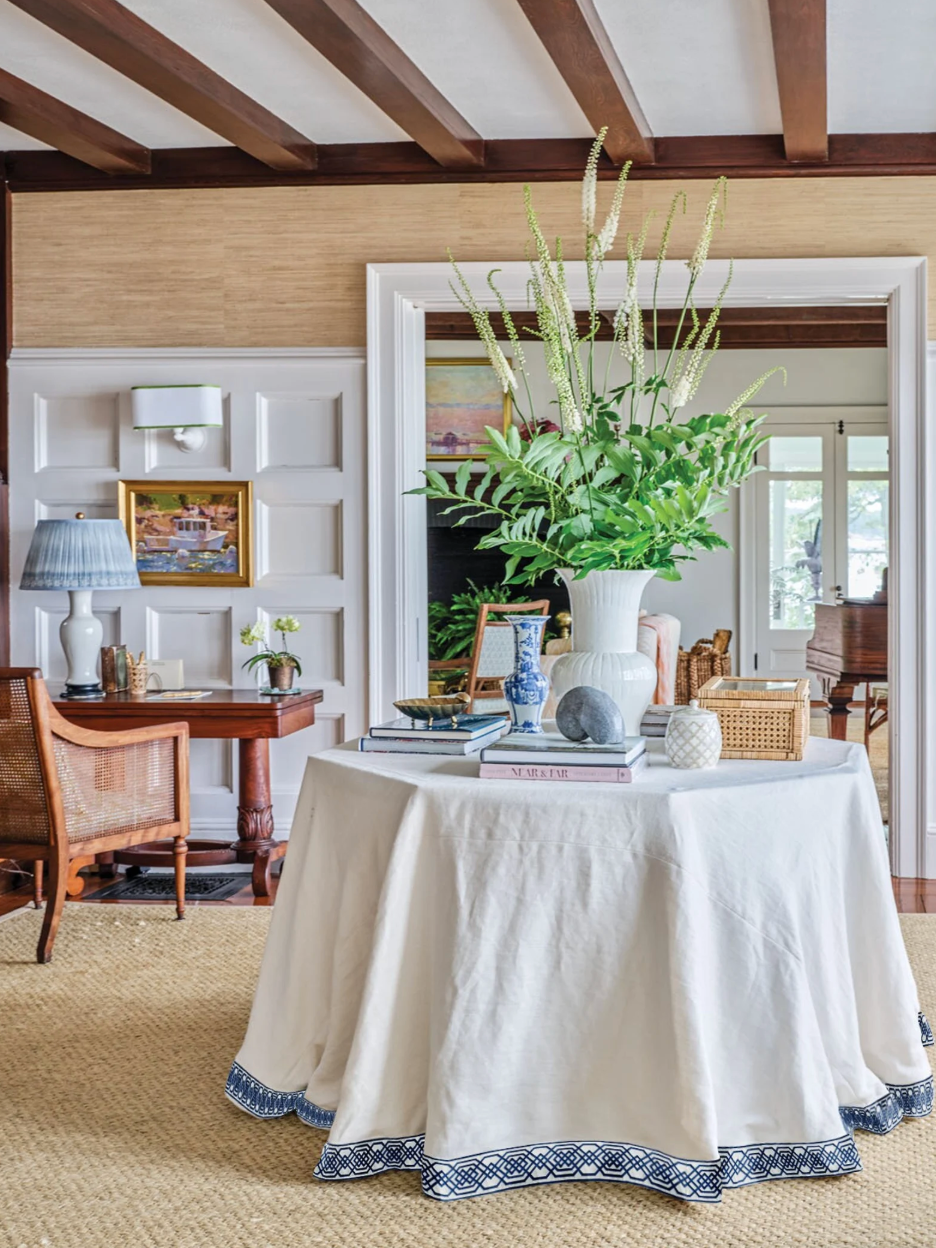
Orientals are classic, but layering them over a sisal or jute base gives them a modern lift. You can also mix in antique kilims or vintage Turkish rugs in updated color palettes to bring pattern without too much formality. One of my all time favorite design moves is a very traditional dining room with botanical wallpaper, fringe trimmed drapes and a classic table and chairs with a sisal rug to just keep it all from getting too serious.
Final Thoughts
Creating an updated traditional look is all about tension and harmony. You want to honor the elegance and beauty of traditional design, but temper it with enough modernity that it feels fresh and lived-in. By choosing the right elements—like French return rods, Euro pleats, bold paint choices, wallpaper, and a well-placed piece of modern art—you can make sure your home tells a timeless story with a twist. Think about adding all the layers that typically get implemented in traditional design—but in a cleaner, fresher way. The layers make it traditional—the warmth created by layered design. The layers can be clean or fresh or updated—but just having them all in place will read traditional.
Still not sure you can get the look you want on your own? I am happy to help! I can be reached at www.carrieluckedesigns.com. Complete my quick contact form for a discovery call https://www.carrieluckedesigns.com/contact/
Happy Decorating!!!
Carrie Lucke


Comments